Odds Movements as a Reflection of Market Expectations in Motorsports

Odds Movements as a Reflection of Market Expectations in Motorsports
When following motorsports—whether it’s Formula 1, IndyCar, MotoGP, or NASCAR—it’s not only the drivers who are competing. Behind the scenes, odds are constantly shifting, telling a story about how the market perceives each competitor’s chances of winning, finishing on the podium, or pulling off an upset. In that sense, odds movements act as a mirror of collective market expectations—a dynamic expression of how thousands of bettors and analysts interpret information, news, and trends.
What Drives Odds Movements?
Odds change when sportsbooks adjust their assessment of probabilities—often in response to how money is being wagered. If a large number of bettors suddenly back a particular driver, that driver’s odds will shorten, while others’ odds lengthen. It’s a reflection of supply and demand, but also of new information that reshapes the market’s perception.
In motorsports, several factors can trigger such movements:
- Technical upgrades – a new aerodynamic package or engine improvement can dramatically alter a team’s competitiveness.
- Weather conditions – rain, heat, or wind can favor certain drivers or teams.
- Practice and qualifying results – strong early performances often prompt quick market reactions.
- Injuries or substitutions – a backup driver or a last-minute lineup change can shift expectations entirely.
When odds move, it’s rarely random—it’s the sum of the market’s interpretation of all these signals.
The Market’s Collective Intelligence
One of the most fascinating aspects of odds movements is how they represent a form of collective intelligence. Each bettor has limited knowledge, but when thousands of people react to data, news, and intuition, a collective picture emerges—often surprisingly accurate.
In Formula 1, for instance, you can observe how odds on drivers like Max Verstappen or Lando Norris evolve as team performance changes throughout the season. When the market senses that a team has found extra pace, that belief is reflected almost instantly in the odds—sometimes even before the media fully catches on.
When the Market Gets It Wrong
Although odds movements often point in the right direction, they’re far from infallible. Motorsports are unpredictable, and even the most sophisticated models can’t foresee a crash, a mechanical failure, or a strategic misstep. As a result, major odds shifts can sometimes turn out to be overreactions.
A classic example occurs when a driver sets the fastest time in practice, prompting a sharp drop in odds—only for it to emerge later that the performance was due to low fuel or a specific tire strategy. In such cases, experienced bettors can find value by understanding the context behind the numbers.
Data, Analytics, and Psychology
Today, odds movements are not just about gut feeling. Professional bettors and analysts use advanced models that combine historical data, telemetry, and weather forecasts to anticipate how the market will respond. Yet, psychology still plays a major role.
When a popular driver like Lewis Hamilton or an American favorite such as Josef Newgarden attracts a wave of public support, it can create a “favorite bias,” where odds are pushed down not because the objective chances have improved, but because many fans want to bet on them. This illustrates how emotion and popularity can distort the market’s rational assessment.
Læs også:

What Fans Can Learn from Watching Odds
For motorsports fans, tracking odds movements can be a fascinating way to understand how the market interprets events throughout a race weekend. It offers insight into where the “smart money” might be going and how expectations evolve in real time.
- Before qualifying: Watch which drivers the market expects to surprise.
- After qualifying: Notice how starting positions reshape expectations.
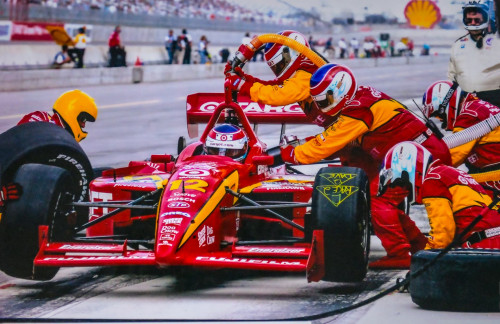
- During the race: Live odds reveal how the market reacts to pit strategies, cautions, and on-track incidents.
Understanding odds movements isn’t just about betting—it’s about understanding how information is transformed into collective expectations. It’s a window into the economic and psychological dimensions of modern motorsport.
A Mirror, Not a Crystal Ball
Odds movements reflect what the market believes, not what will necessarily happen. They show sentiment, not certainty. Still, they remain a valuable tool for anyone seeking to grasp the dynamics of contemporary motorsports, where data, strategy, and perception are as crucial as raw speed on the track.
Læs også: